by John Byrne Barry | Dec 8, 2014 | Bones in the Wash
One of my favorite reviews of Bones in the Wash is from my brother Michael, an English professor at the University of Detroit-Mercy. He may not be objective, but he does study and teach novels for a living. So that’s something.
(There are 67 other reviews if you want some less familial takes.)
Well-crafted, Thoughtful, and Fun
I know the guy who wrote this too, and have known him for a while. He is my brother. I was reading the book while traveling this summer, so I’ll start with one story of reading while on the train and one of reading while on the bus. I got more and more embroiled in the plot as I got further into the book, so I wasn’t paying much attention to my surroundings. And when I was within four paragraphs of finishing, my stop on the Chicago el train was coming right up. The train stopped and I had three paragraphs to go. Things in the book were pretty well wrapped up, but I wanted to see just how it ended. By the time the doors opened, I had one paragraph to go. I kept reading, finished, and dashed out the doors just as they were closing.
The day before, I was next to a guy on the bus, and I was talking about the book. I teach literature, so it’s a pleasure for me to talk about books. He was a reader, so he told me about Philip Roth and I told him about John Byrne Barry. Anyway, he said “Well, it must be awkward, you being an English professor and him wanting to know what you think of the book.” And I laughed and said it wasn’t awkward at all; the book was so good I didn’t need to worry about that for a second.
I like the book’s stories of trying to do the right thing in the context of hard-ball politics. It reminded me of Robert Penn Warren’s All the King’s Men that way — there are times when one of the main characters, an earnest young woman who wants to bring about political change, wonders whether it would be a morally just course of action, in the long run, to dig up dirt on her opponent’s campaign manager (who is another of the main characters), to discredit him and win the election for the candidate whom she genuinely believes occupies the moral high ground. There is a meditation on how we can know enough about the consequences of an act to judge whether it’s good or bad (good news? bad news? who knows?), there are references to the temptations of political office, temptations to take care of your people.
Mayor Tomas Zamara has lost his wife, years earlier, in a mysterious disappearance that is assumed to be a murder, and when we see one Mexican drug cartel try to frame another other cartel for the crime, there’s a parallel to another plot playing out that fall, in which one party is trying to frame the other for voter fraud. This book is plot-driven and it is, for that reason, a page-turner, but the author–I’ll call him John–puts a lot of care into the composition of that plot, and the way the small plots start to take on the same shape as the larger plot is one of the ways that shows. The book keeps a lot of plots going at once, and they’re all interesting. At some point a journalist named Bas is saying that this news story he’s covering has everything — family drama, game-changing moments, gangsterism, and illustrious history — and yes, this book has all that.
by John Byrne Barry | Sep 18, 2014 | Bones in the Wash
Thanks to my friend Lawson LeGate for his perceptive review of Bones in the Wash. I wish I could say that I consciously set out to do the things he says, but maybe it doesn’t matter.
“It is remarkable how the author so completely understands the characters he develops for this story: the dynamics of Zamara family; the competitive relationship between two young women friends; the distinctly different romances between young Sierra and her boyfriend, between Mayor Zamara and the mysterious Tory, or the strained marriage of Sierra’s parents.
“You feel as if you’re peering into the private lives of real people, all skillfully set against the backdrop of the highly competitive world of presidential politics, with the sinister world of organized crime casting a faint but menacing shadow. It takes a fertile imagination to dream up a flash flood that threatens the lives of the mayor and his lover on an outing in one part of the state, while uncovering the bones of his murdered wife in another. I found myself eagerly turning the page to discover how the various plot lines in this book were going to turn out.
“Highly recommended.”
Everything he says above I did intend to do, but I never spelled it out quite the way he did. Now it’s true that I very deliberately linked the flash flood that the mayor and his lover were caught in with the bones in the wash discovered downstream. I remember mapping that out.
But the contrast between the relationships was not as conscious. The distinct differences were not so much planned as much as they grew out of the distinct characters. After all, what makes relationships similar are the universal things, like sexual attraction and getting each other and common likes. What makes them different are the people who come to them.
—
It’s been a challenge getting the word out about this novel, which I sweated over for years. But when someone enjoys it and captures so well the reasons I wrote it in the first place, well, that makes all that sweat worth it.
You can read the first three chapters here, and the Making of Bones in the Wash, Parts 1 and 2, here.
by John Byrne Barry | May 2, 2014 | Will Ask for Directions When Lost
Not only was Wednesday the last day of April and the hottest day of the year, it marked the 40th month that I’ve exercised every day.* That’s 1,216 days, but who’s counting?
I hiked my regular loops — Tennessee Valley-Coastal Trail-Fox Trail. Four miles. An hour and 10 minutes. About 1,000 feet of climbing. Gorgeous views. That photo at the top of the page is from this trail.
I started keeping track on January 1, 2011. My goal at that time was every day for the year. When 2012 arrived, I kept on going. Of course, my reward for reaching this milestone is to keep at it for another 40 months. At least.
So what counts as exercise? Walking, certainly. That’s what I do more than anything. Then, in order of frequency, there’s bicycling, lifting weights, Zumba/aerobics class, and, hardly ever, swimming and running.
How long before it counts? An hour, though I give myself some slack and 45 minutes counts when that’s all I can fit in. (On the stopover from Ecuador three years ago, I walked back and forth in the small San Salvador Airport at least a dozen times, which was about 40 minutes. But we had hiked the Inca Trail ten days earlier so I decided that was good enough.)
I’m not an athlete. When I bicycle to the city, the only cyclists who don’t pass me are tourists on rented bikes. After 15 years of Aerobics or Zumba, I still feel like a beginner. Most of the time, I do these physical activities myself, though I frequently walk with my wife and/or with friends.
One key to making the every-day routine work is, whenever possible, walking or bicycling to where I need to go anyway. For ten years, I commuted to or from work 2-4 times a week, from Mill Valley to downtown San Francisco. I walk to and from grocery stores, cafés, meetings, friends’ houses.
Since it’s so easy to make charts these days, I made one. This is an estimate, of course. (I kept track off and on, but then figured all I needed to know was that I did something, not what it actually was.)
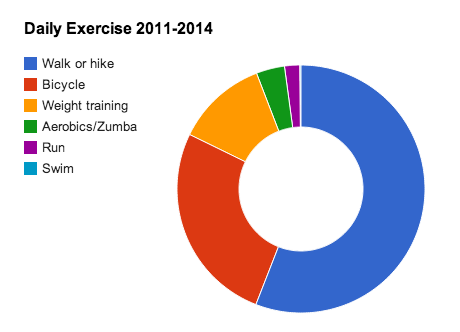
As you can see, my most common activity, by far, has been a walk or hiking. But when does a walk become a hike. When I wear hiking boots and it’s on a trail? When it’s long and steep? Going to Peets on city sidewalks is a walk. Climbing a 14,000-foot-peak in Colorado is a hike.
Here are some photos of memorable walks and bike rides.
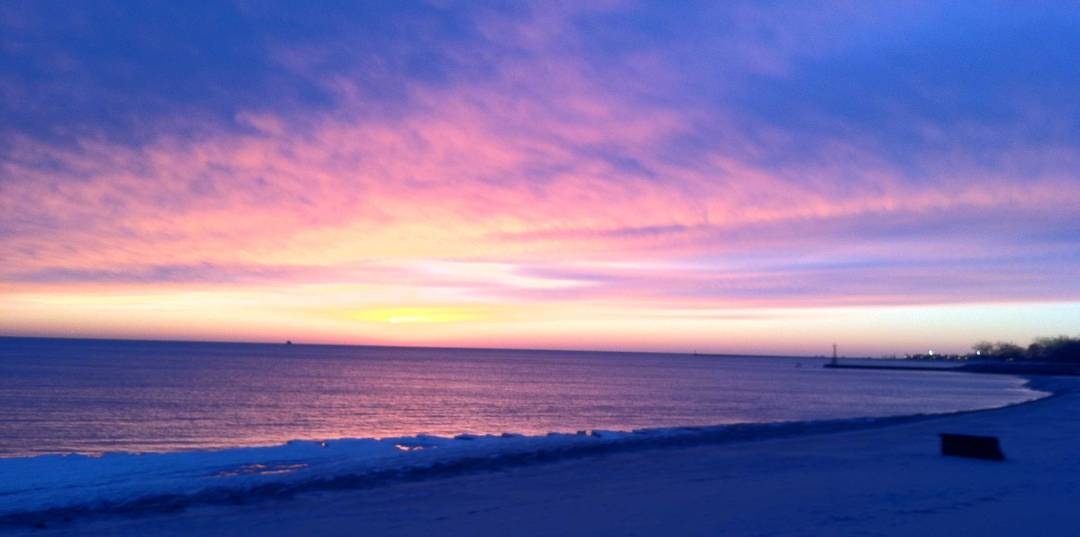
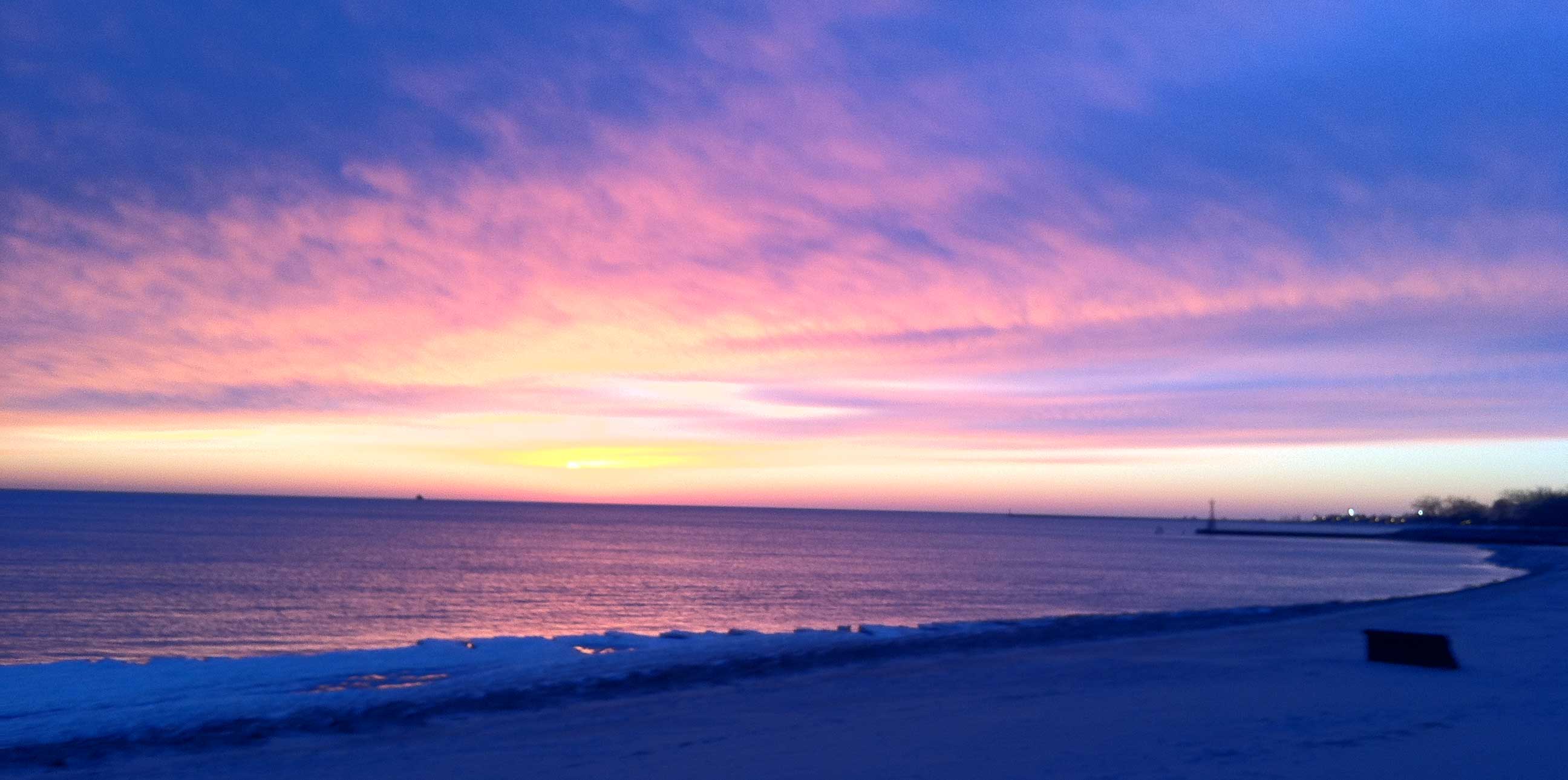
- Walking from my mom’s apartment in Edgewater to downtown Chicago (about 6 miles). Here’s Lake Michigan on a cold winter morning.
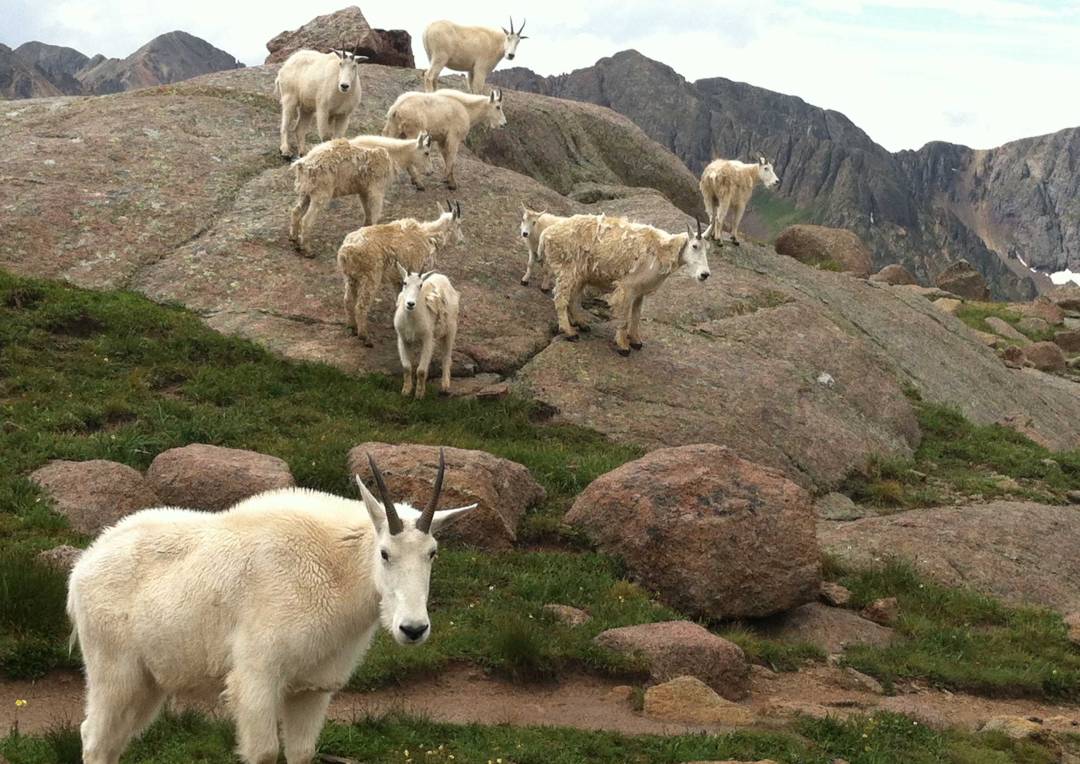
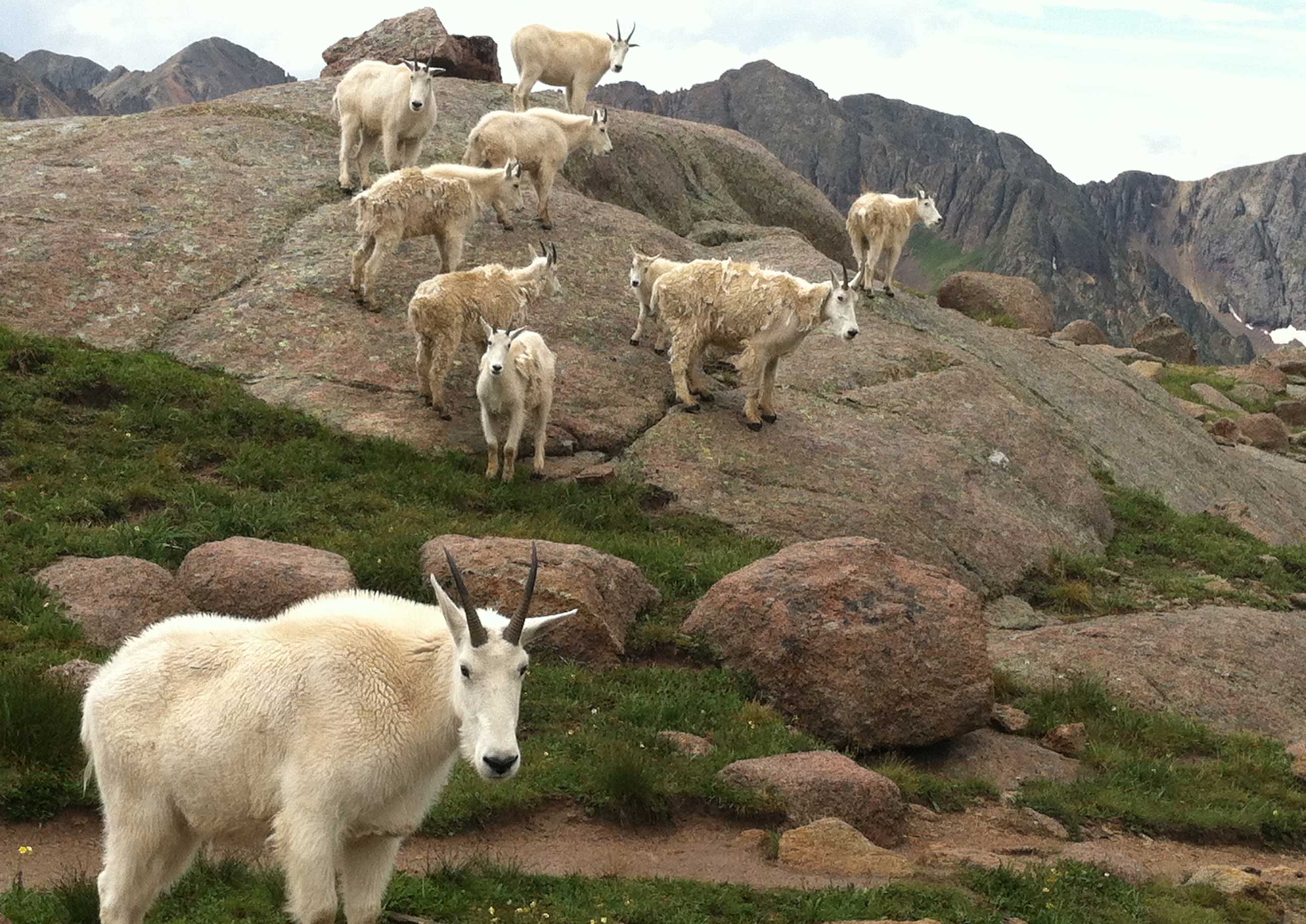
- Backpacking in a very different Chicago — the Chicago Basin in Colorado’s Weminuche Wilderness — with a wonderful group of Sierra Club folks two years ago. My first three (and only three) 14ers.
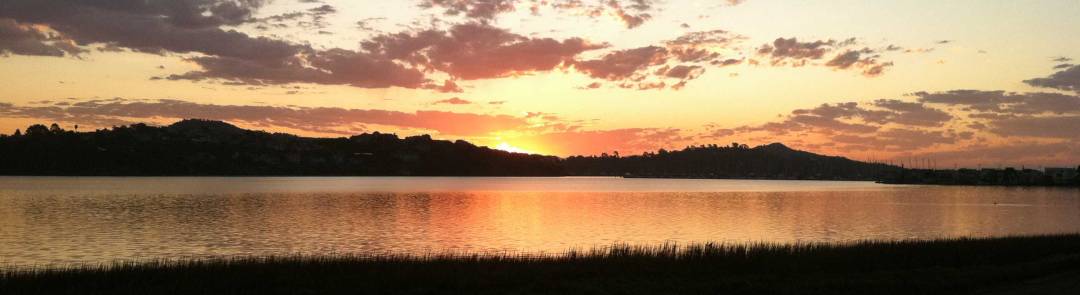
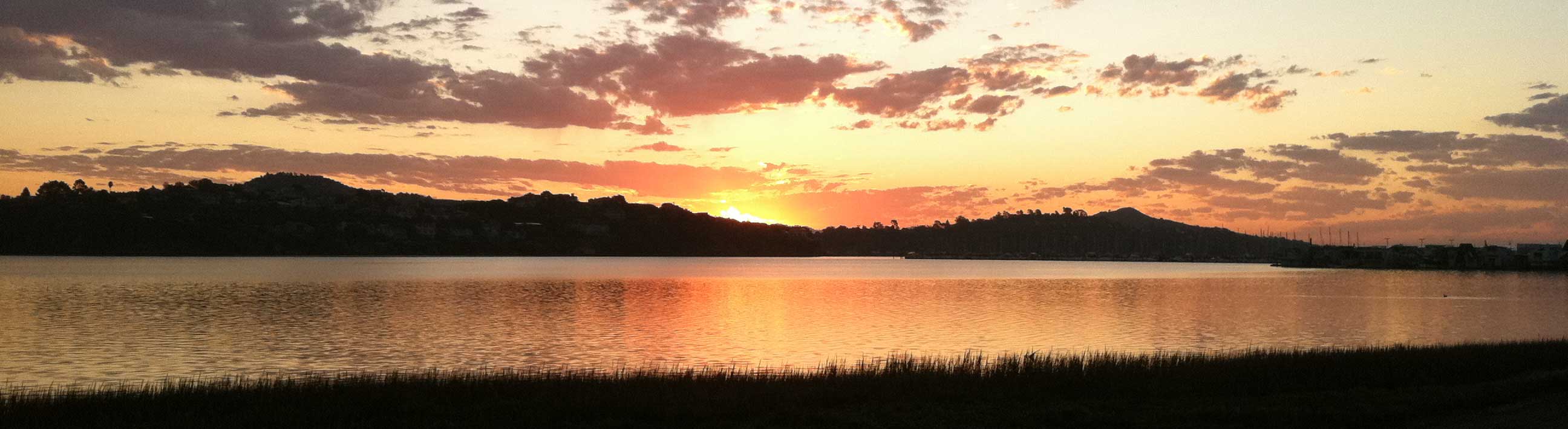
- I took most of my hundreds of rides to or from San Francisco as the sun rose or set. Here’s Richardson Bay on the way in.
- And here’s a recent hike with my love Z at Goat Rock Beach on the Sonoma Coast, where the Russian River meets the Pacific.
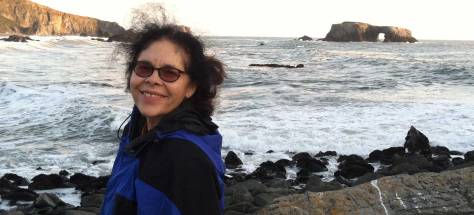
Sometimes this daily habit is a chore. I wish I didn’t have to do it. Like bicycling toward the Golden Gate Bridge on a summer evening, directly into the cold fog. Or dragging myself up the last steep hill home.
That’s when I tell myself that I’m grateful I can still do it, that I’ve avoided injuries, pain, and never really been sick. I’d like to believe my habits have something to do with that, but there’s no denying luck and genes.
I know that can’t last forever, but my goal is to keep this going for as long as I can. One day at a time.
—
*As to that asterisk above, in the first paragraph, no, I’m not taking steroids. But I did miss one week with the flu in June of 2012. I made up for it.
by John Byrne Barry | Mar 19, 2014 | Uncategorized
For Christmas in my family, we pull names out of a hat and give one present to one person. My brother Pat got me back in December, and he suggested maybe he could come out here from Chicago and help with a project.
Yesterday, we started that project — building a rock wall and path for a garden bed on the steep hillside outside my house in Mill Valley. We were stiff and tired last night — maybe the beers contributed to that — but what a great present. Other than the expense of buying the rocks and gravel and stepping stones, I would do this again in a second.
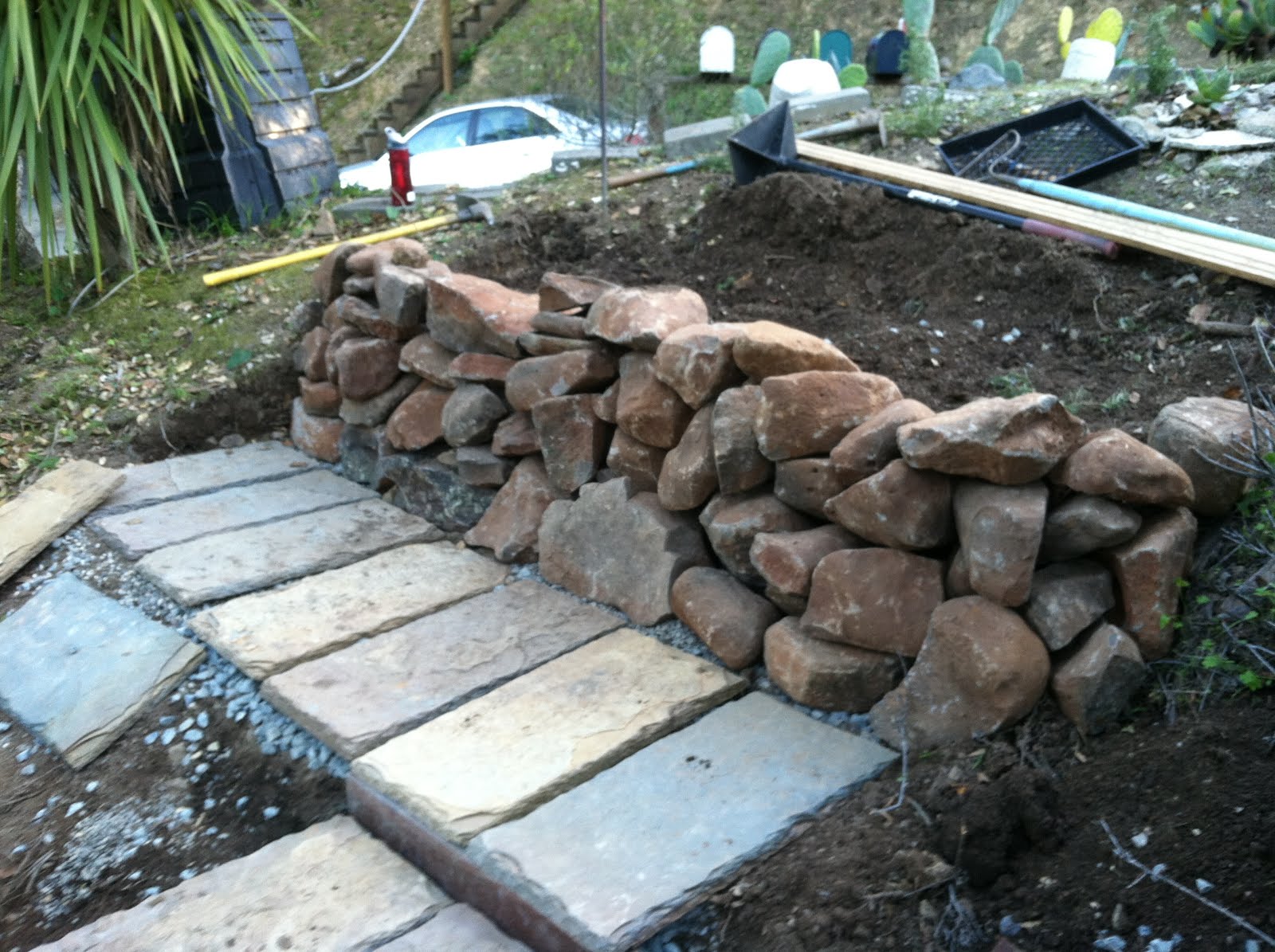
Good thing, because after breakfast, we go at it again. We made excellent progress on our first day, more than I expected, but we’re not done yet. The rock wall is complete (and there are enough rocks left to build another one) and eight of the stepping stones are laid, but we have another dozen or so to go. Plus we had a little mission creep and now we’re also going to redo some of the existing steps down the hillside, which have been an accident waiting to happen.
Here’s what it looks like so far. Not bad for a couple of middle-aged men who sit in front of screens most days.
Here’s the before photo, with a couple sample rocks.
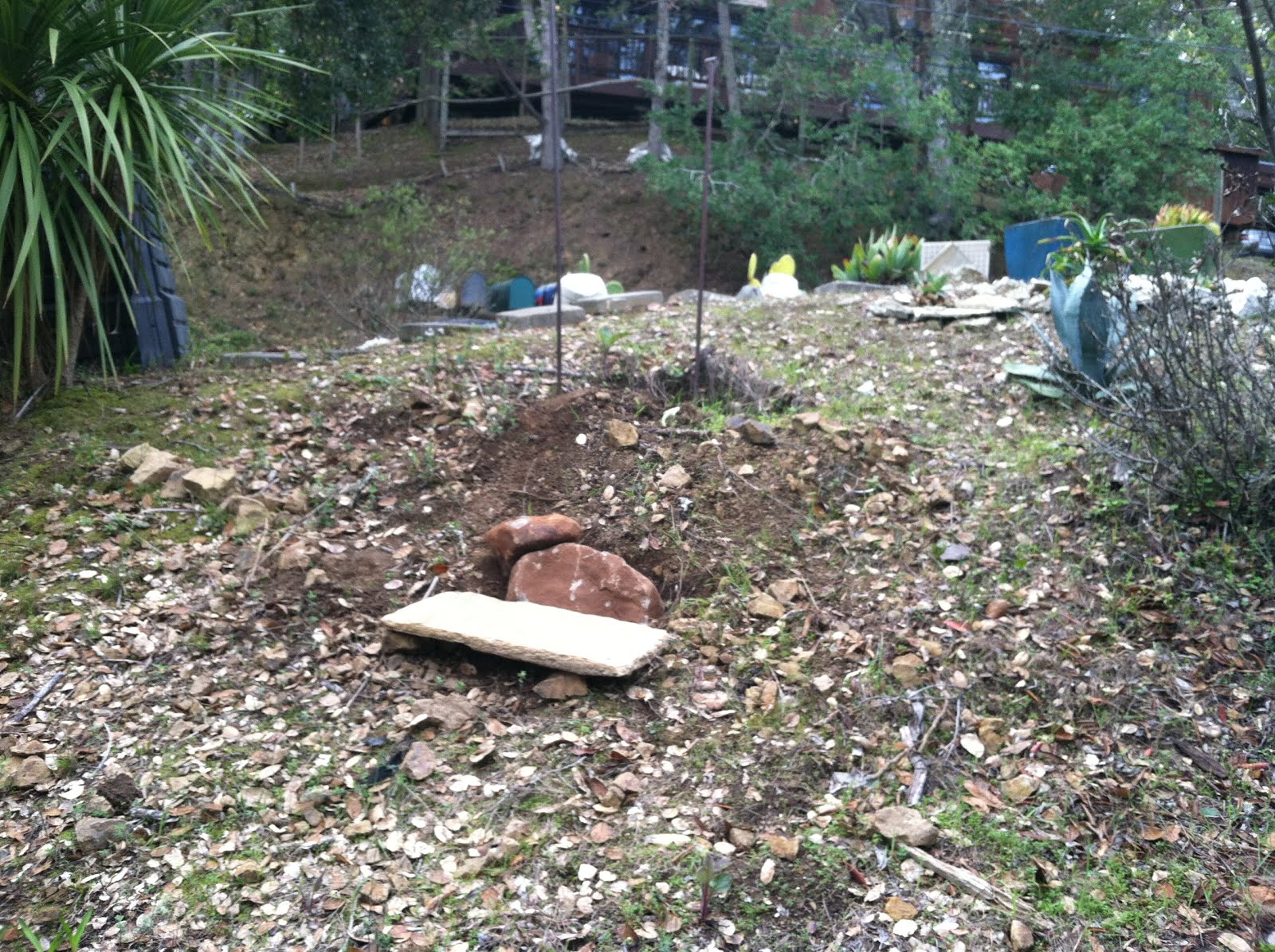
When we selected the rocks, Sonoma fieldstone, the most local and the least expensive, we learned that there are two main sizes, heads and double heads. The double heads were pretty heavy, but we didn’t need many of them. Those were for the bottom row, to create a strong, stable foundation.
—
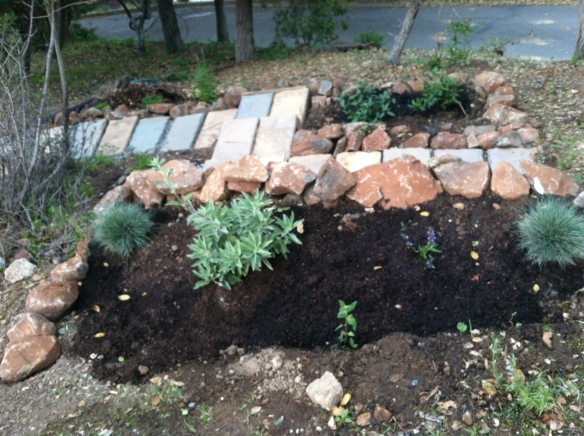
It’s Saturday morning. We’re already done. We alloted ourselves three days and finished it in two, even with the mission creep. (Here’s to setting modest goals.) We even did some planting. Here’s a view from above. It already looks good, but will be even better as the plants grow.
We also came up with a new startup idea: Stone Age Fitness. You pay us to be your personal trainers, and we put you to work carrying rocks down steep hillsides. Here’s Pat posing for our promo.
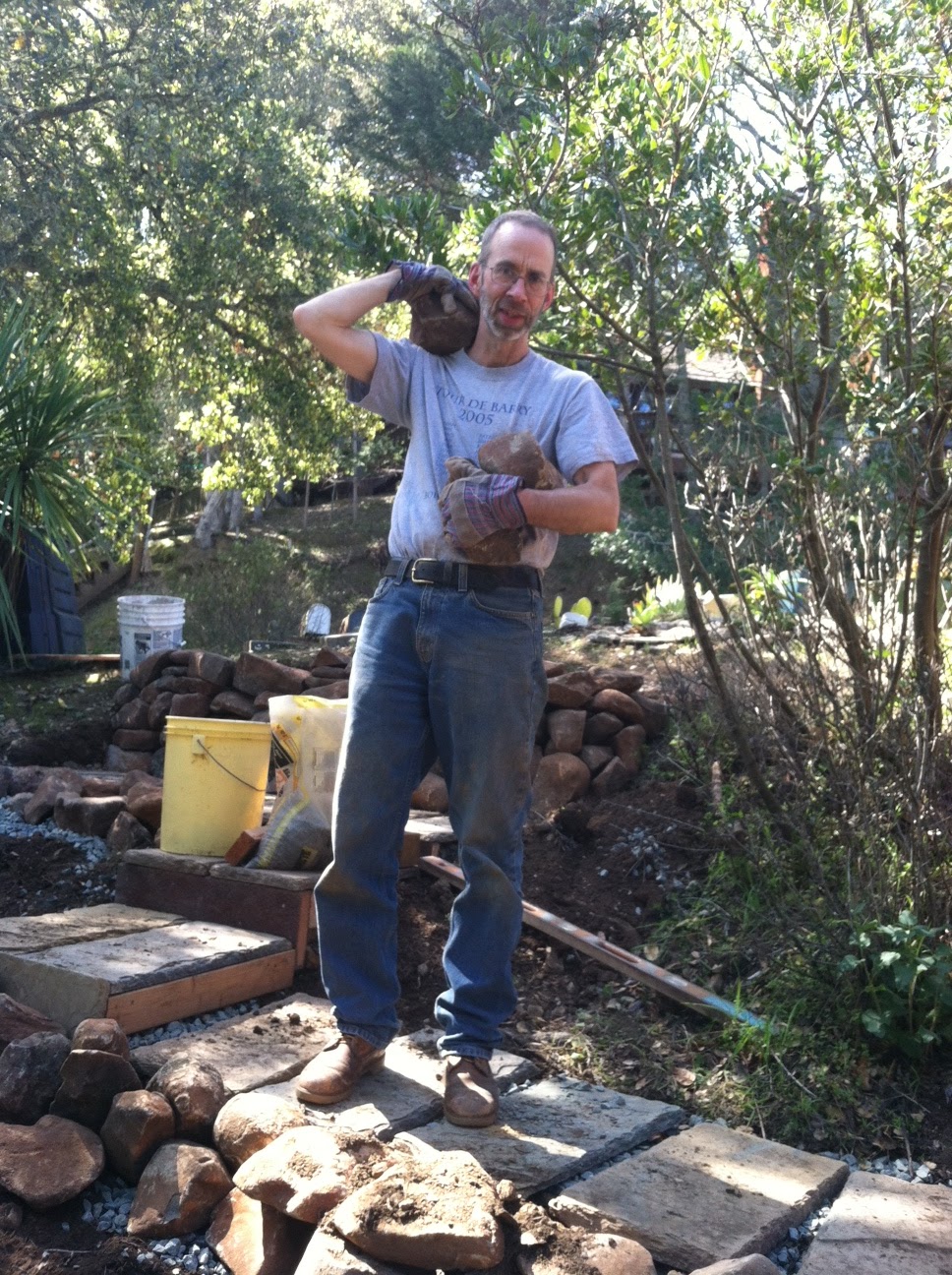
Here’s how we did it:
Minimal Planning, Mostly Improvisation: My plan had been to sketch out the wall and garden using my rudimentary landscape design skills. I did map out my yard in Berkeley, years ago, but it was a flat rectangle. Easy to measure. This is a curved corner lot on a steep hillside. I took a number of measurements, but never did more than the most cursory sketch. (Enough to show it to José at American Soil Products where we bought the stones, so he could help us estimate how many we needed.) More important than the sketches was reading up on some web sites and landscape design books.
What we built is called a “dry-stone retaining wall,” with no mortar to hold the stones together. The Incas built huge walls and agricultural terraces using these methods 600+ years ago. Similar walls from centuries ago have been found in Ireland, Scotland, Zimbabwe, China, and many other places. To prepare fields for planting, farmers had to remove rocks from the soil, so they were right there at hand, ready to be used for any needed structures.
Please note: This is not a how-to. We’ve never done this before. We don’t know if the rock wall will come tumbling down in a downpour, will fall over when some deer kicks it. I know more than I did a week ago — that’s as much as I can promise.
What I did do that served as a starting point was approximate where the walls and pathway would be with hoses and stakes. After walking around our worksite, we made some adjustments to these boundaries and started digging.
Fortunately, we had some heavy rains in February and the ground was soft and easy to dig. We piled the dirt on a tarp we spread out on the hillside, with an old plastic turtle sandbox on top to serve as a backstop and prevent the dirt from sliding down the hill.
The Flat Earth Society: For the rock wall and steps to be stable, we needed first to create a level surface. We cut into the hillside with picks and shovels and then, using a tamper from the Berkeley Tool Lending Library — Yay Berkeley — created a strip about three to four feet wide. Then we poured gravel on that strip and tamped it again. That was wide enough for both the foundation of the wall and the flagstone steps in front of it.
The original specs were for one rock wall about a foot deep, two feet high, and six to eight feet long, leaning into the hillside, holding a garden bed about four feet deep. Almost as important was a level pathway in front of the garden and connected to the steep steps along the side of the house. The hillside is steep enough that it’s a challenge to find any spot where you can stand with both feet at the same level. On the morning we started the job, we got two pallets delivered to our driveway with 1.5 tons of Sonoma fieldstone, 15 rustic green rectangular flagstones, each 1 foot by 2, and four bags of gravel, nowhere close to how many we needed.
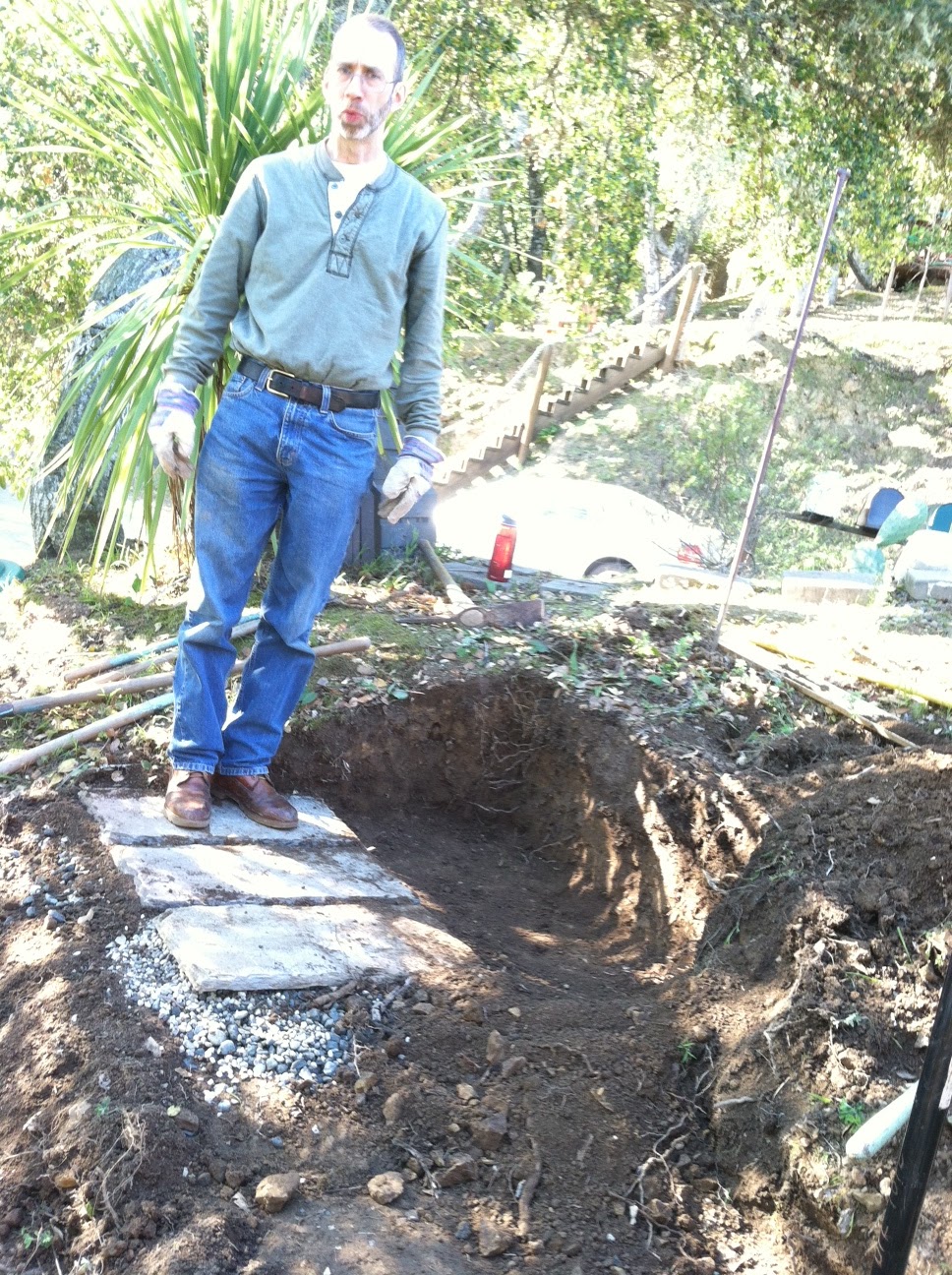
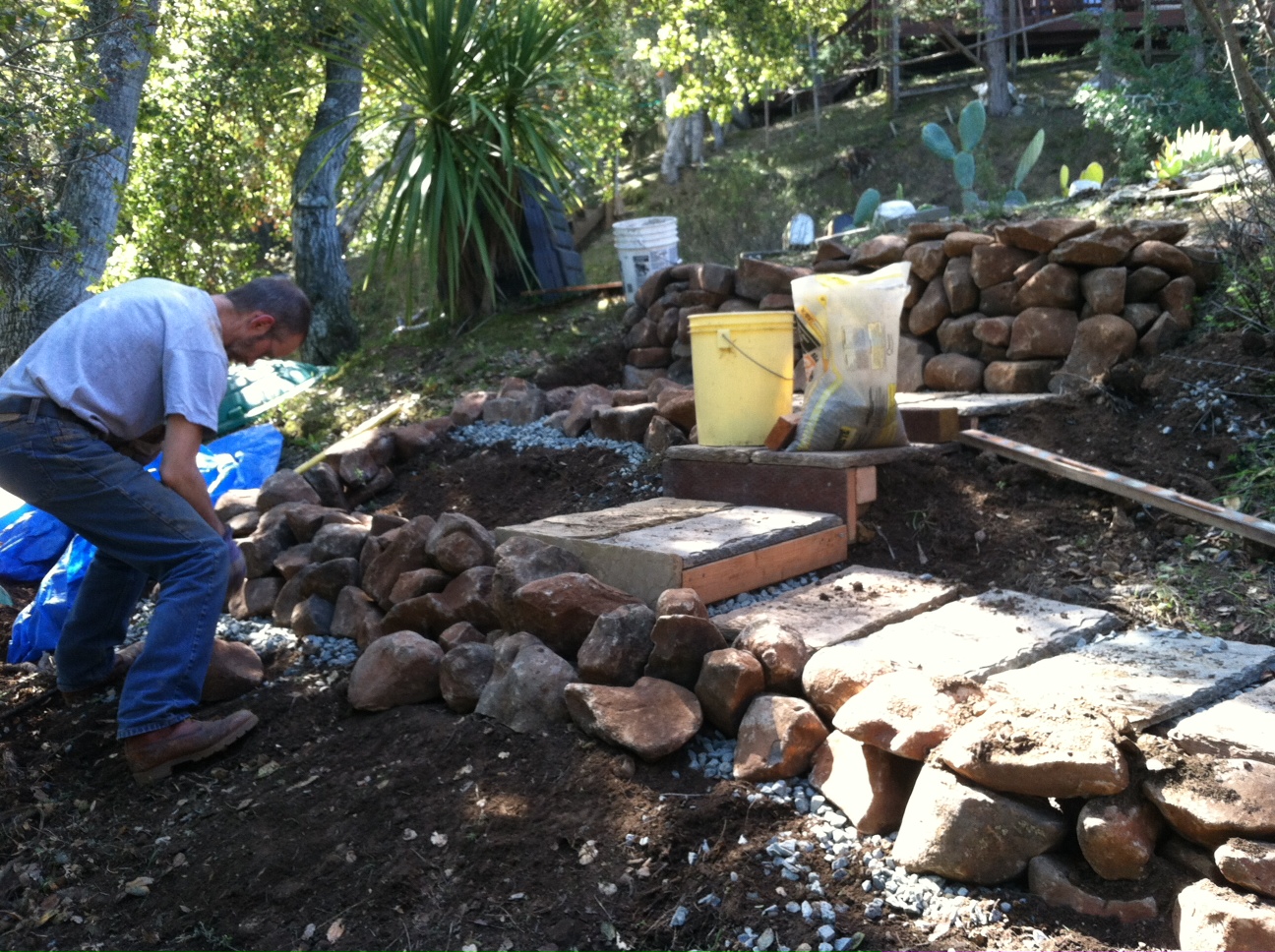
We laid the flagstone steps first, because then we could stand on them while we built the wall, which went up surprisingly fast. We did have to lug a lot of rocks thirty feet or so down these steep treacherous steps from the driveway to the worksite. Below you can see Pat standing on the first three steps we laid and the cut we made into the hillside. The next shot shows the beginning of the wall.
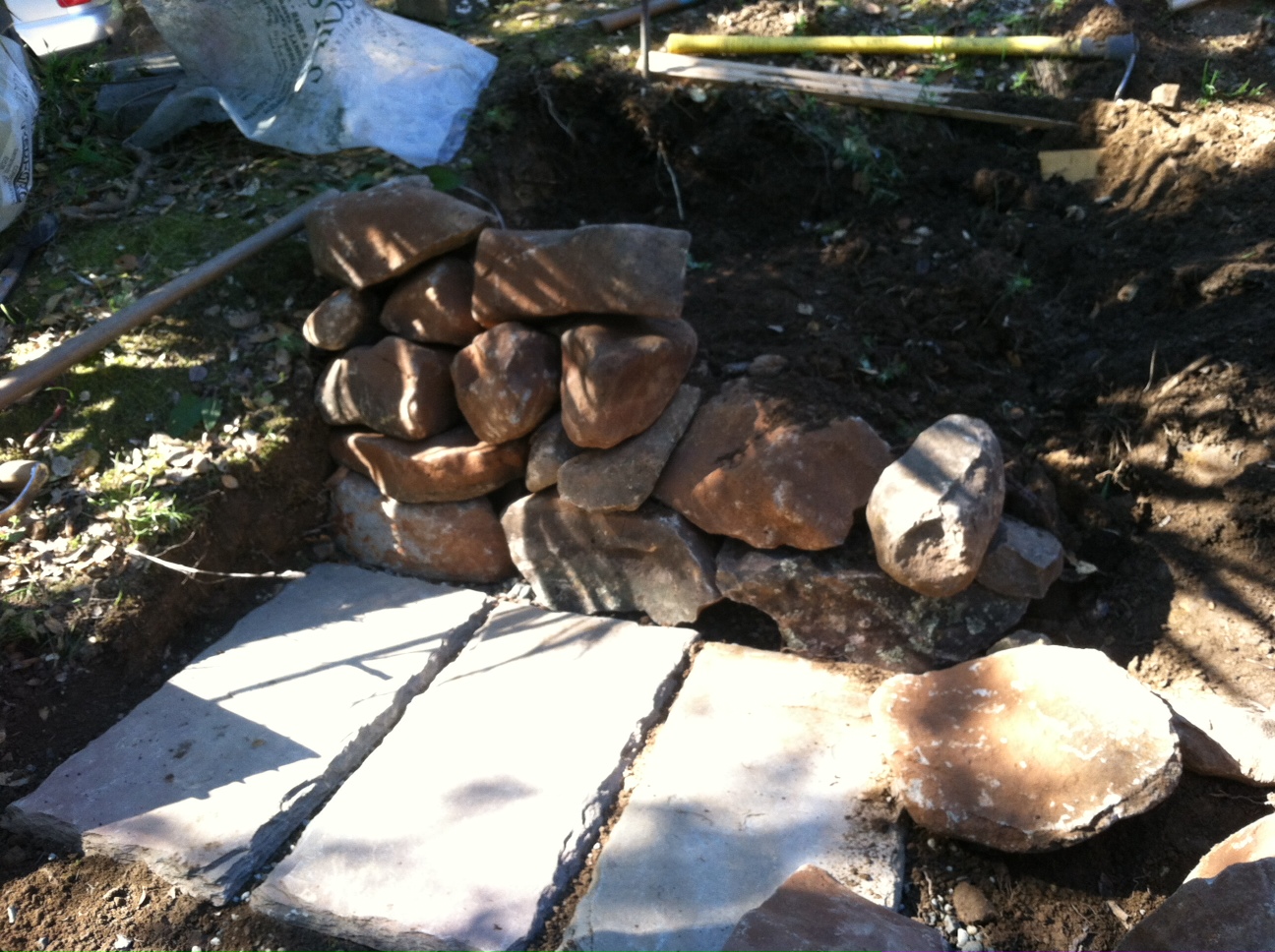
We angled the wall ever so slightly in toward the hillside, and when we reached about a foot high, we filled behind it with lots of gravel (for drainage) and some of the dirt we had dug out earlier. The stacking of the rocks was like putting together a puzzle. At first, I was looking for specific shapes, then I found it made more sense to just pick one or two rocks and then find the best spot for them on the wall. We did our best to overlap one double head on top of two heads, the way a brickmason would overlap bricks.
We completed most of the rock wall and six of the flagstone steps by midday and then we had to go out and buy some more gravel, flagstone steps, and lumber.
Overbuilding: My brother and I have both done a lot of work around our houses for years, but he’s more experienced and skilled at construction, and he suggested we get some pressure treated 4 x 4s and 2 x 8s to create frames for the stepping stones as they descended the hill. (My original thought was to do without, but he argued, correctly, that we wanted this to last through heavy rains, and we should err on the side of overbuilding. So we did.)
You can see below, just to the left of the yellow pick, the way the lumber framing allows us to move down the hills and keep the flagstones level.
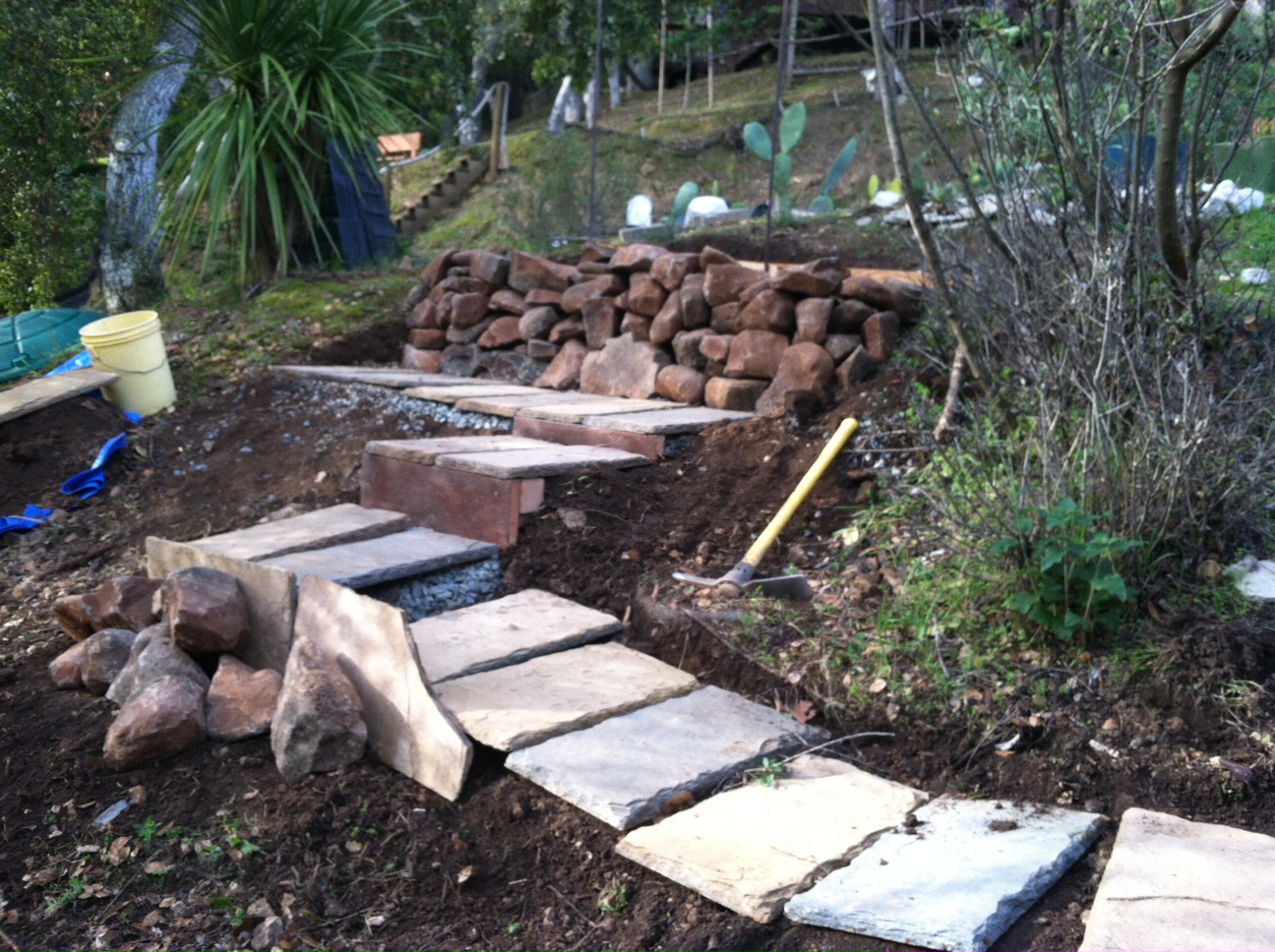
As I said, we had more rocks than we needed for one wall, so we built additional ones, to create another planting area, but mostly to give more support on the downhill side of the flagstones. So a hard rain wouldn’t wash out the gravel and dirt underneath them.
Natives, Not Vegetables: My original thought was to grow greens in the bed — chard, kale, lettuce, spinach, and so on. (Not enough sun or heat to grow tomatoes.) I knew that because of the deer, we would need to build some sort of cage to cover the bed. I did more sketches of that than the rock wall itself.
I’m a newcomer to this hillside home. My wife has lived here for more than 20 years, I’ve been here less than one. She likes the natural oak woodland look and I promised that the garden bed project would be in keeping with the natural surroundings. Certainly the rock wall seems very organic. If we dug deep enough, we’d probably find rocks just like the ones we piled into a wall.
But a cage over the bed? That could be ugly. So we decided instead for native perennials that were deer-resistant, and went down Friday afternoon to the native plant nursery at Tam Junction and picked up two coffeeberry bushes, three sages, and several grasses and groundcovers.
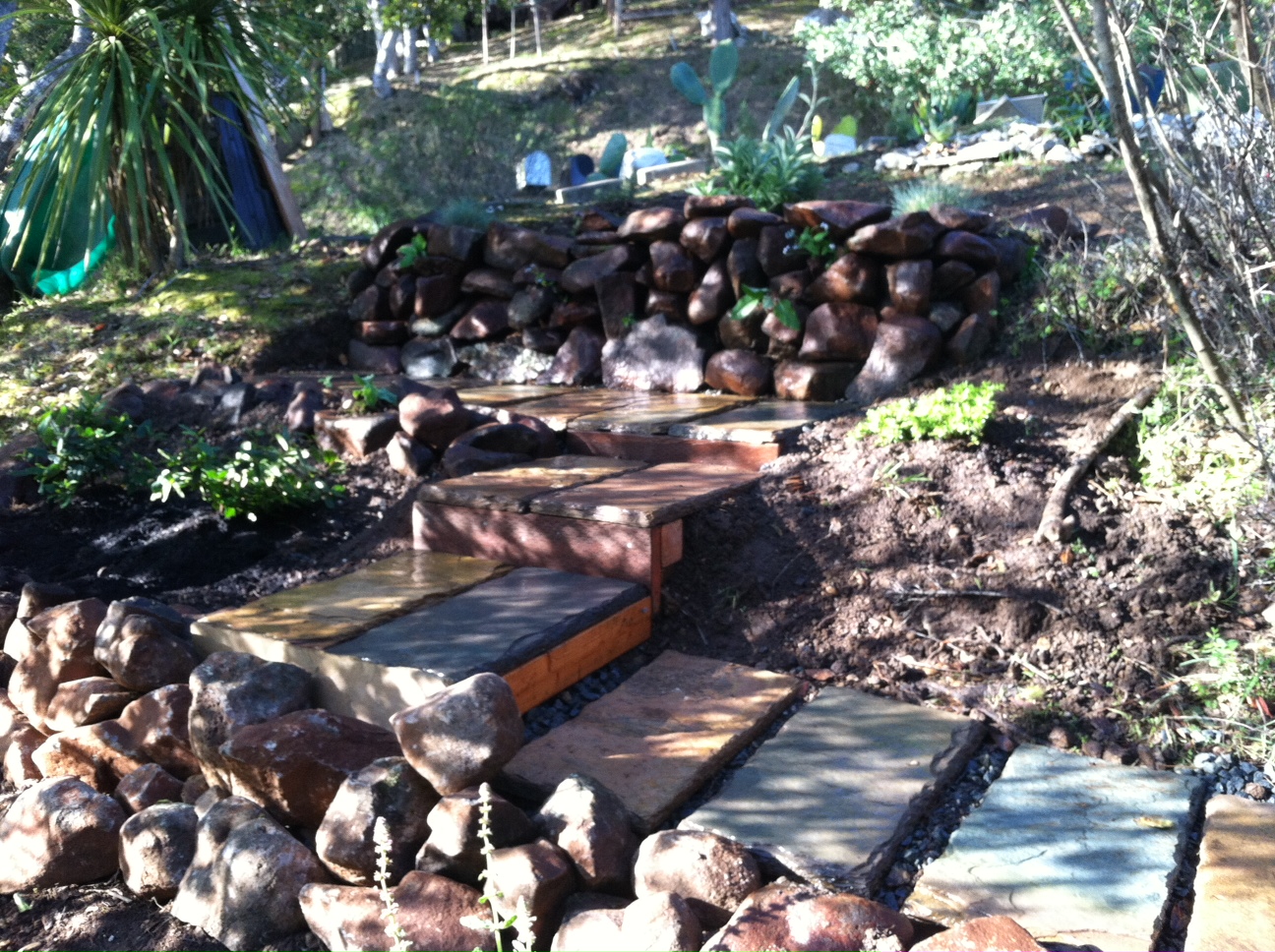
Here’s our planted garden from below. Pretty great, huh? While these are native plants, they may take a year or more to get fully established. Especially given the drought. But once they do, well, they’ll act as if they belong here.
(John Byrne Barry is author of Bones in the Wash: Politics is Tough. Family is Tougher.)
by John Byrne Barry | Feb 28, 2014 | Bones in the Wash
First Draft to Publication
(Here’s Part 1: Ideas to Pages)
I planned from the beginning to self-publish. For two reasons: One, I had already failed to get an agent and I feared that might happen again, but the main reason was that I could get to market faster and I had this idea, a delusion, really, that the book would be ready to publish and promote in time for the 2012 presidential campaign.
I remember at a work retreat in January of 2011, we were in big circle introducing ourselves, and we were all supposed to share something most people didn’t know about us. I said I was writing a novel and I going to finish it by the end of 2011.
And I did. I had my first complete, beginning-to-end manuscript. But it took almost two years from that time to rewrite it and rewrite it and edit it and proof it and so on.
No Writer Is an Island: I had a lot of help. I am so grateful for the novel writing group that I have been part of since 2001. Going on 13 years now. They read it in segments over a long period of time, and multiple versions, and they did some tough love with me, and suggested a lot of major changes that I resisted at first, then took.
The biggest one: I had three point of view characters, now I have two. You all know what I mean by point-of-view characters?
One, Mayor Zamara, my protagonist. Two, his antagonist, Sierra León. The third, Sierra’s father, Lamar, who also, unbeknownst to Sierra, was also Tomas’ therapist. Lamar is still in the book, but for the first five years of the book, had his own story, his own chapters, his own point of view. Those are gone. Now he’s only seen through the two point-of-view characters.
And the book is better. Not to mention shorter and tighter.
My wife Nanette, who was my toughest critic, also helped me get rid of things I didn’t need. Sometimes I resisted, and sometimes she was wrong, but mostly she was right, and I’m pleased to say that most of the time, I listened to her. (Though she’d be the first to tell you I left in some things she would have liked me to cut.)
Starting Later, Ending Earlier: One valuable practice that helped make the book more of a page-turner is I went through my chapters, and wherever I could, I started them later and ended them earlier.
Especially the end of chapters.
I knew the book needed to be shorter, and there are two main ways to do that. One is cut entire sections, chapters, plot lines. I eliminated about eight chapters by removing Lamar as a point-of-view character. The other is to shorten what’s already there, and I did a lot of that.
Knowing what I know now, I would have cut the end of many of these chapters even if the book were just the right length. I can think of five or six chapters and scenes where I had another three, four paragraphs, and I just chopped them. Made the chapter endings more abrupt. Didn’t tie it up in a bow. Left the reader with some uncertainty.
It helped create sense of racing toward the end.
Reaching the FInish Line: I published the book through CreateSpace, owned by Amazon, and I did the print version first. My friend Bill Selby, from the novel writing group, a graphic designer as well as a writer, did the book cover, which I’ve received lots of compliments for. (I had lunch with him in January, gave him a copy of the trade paperback. He weighed it in his hand, said, “That looks good.”)
The photo on the back cover, balloons floating over the Rio Grande in Albuquerque, is by friend Jim, who went to the balloon festival a couple years ago and took some great photos.
I formatted the inside in Microsoft Word, which took months, and was painstaking and tedious, though of course I was proofing and editing at the same time. Once I had uploaded the pdf for the trade paperback, I stripped out most of the formatting and did the ebook for Kindle. Took only a day or two. I plan to publish the ebook with Smashwords and other publishers than Amazon, but haven’t gotten to it yet.
Writing, editing, and publishing the book was quite an accomplishment. But now comes an even more daunting task — marketing.



Recent Comments